Parkinson’s disease (PD) एक progressive neurological disorder है जो दुनिया भर में लाखों लोगों को प्रभावित करता है। tremors, rigidity, bradykinesia (slow movement), balance problems और non-motor symptoms जैसे depression, cognitive decline और sleep disturbances इससे जुड़े होते हैं। दवाइयाँ symptoms को manage करती हैं लेकिन disease progression को पूरी तरह रोक नहीं पातीं। यही वजह है कि patients और doctors non-invasive brain stimulation जैसी advanced therapies की ओर रुख कर रहे हैं।
Non-invasive brain stimulation क्या है? यह बिना सर्जरी के brain activity को modulate करने का तरीका है। मुख्य techniques में Transcranial Direct Current Stimulation (tDCS) शामिल हैं। ये methods neurons की excitability बदलकर neuroplasticity को boost करते हैं – यानी brain के खुद को repair और reorganize करने की क्षमता बढ़ाते हैं।
Parkinson’s Disease में Brain Stimulation की Role
Parkinson’s में substantia nigra के dopamine-producing neurons degrade होते हैं, जिससे motor control affected होता है। Non-invasive stimulation motor cortex, dorsolateral prefrontal cortex या अन्य targeted areas पर काम करके dopamine pathways को indirectly support कर सकती है।
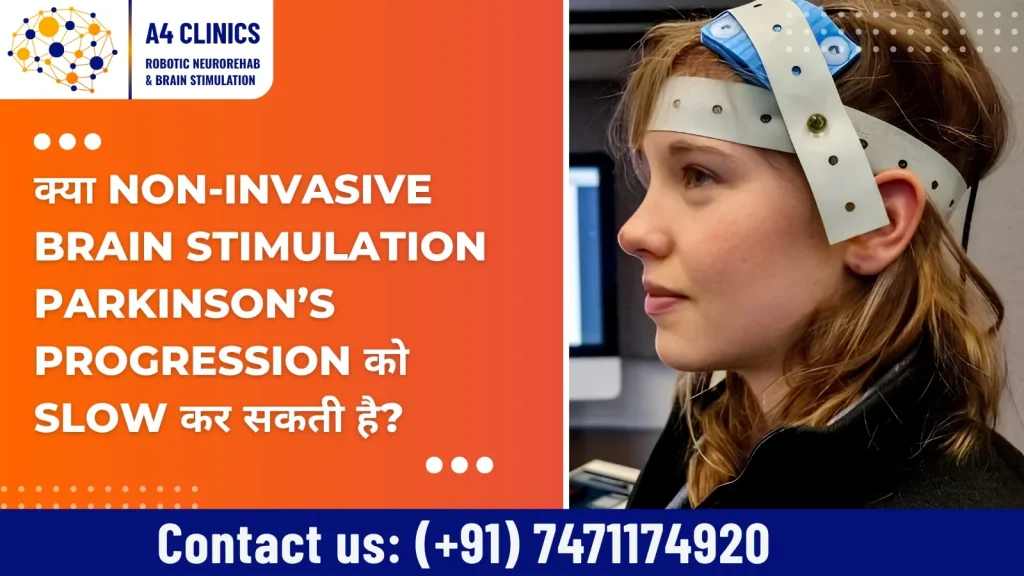
tDCS में scalp पर saline-soaked electrodes लगाए जाते हैं और weak direct current पास किया जाता है। यह painless है, outpatient basis पर होता है और sessions आमतौर पर 20 मिनट के होते हैं।
Research से पता चलता है कि ये therapies motor symptoms में improvement ला सकती हैं। Meta-analyses दिखाते हैं कि tDCS gait speed, freezing of gait और कुछ cognitive aspects में मदद कर सकता है, खासकर milder cases में।
क्या ये Progression को Slow कर सकती है?
यह सबसे important question है। Invasive deep brain stimulation (DBS) पर कुछ studies suggest करते हैं कि early-stage में tremor progression slow हो सकता है, लेकिन non-invasive techniques के लिए evidence अभी emerging है।
कुछ long-term follow-up studies indicate करते हैं कि repetitive non-invasive stimulation disease progression को modulate कर सकती है, खासकर younger patients (≤65 years) में। Neuroplasticity promote करके ये therapies damaged neural connections को strengthen कर सकती हैं, जिससे symptoms की worsening की speed कम हो।
हालांकि, ज्यादातर studies symptomatic relief पर focus करते हैं। Motor function, gait और daily activities में improvements देखे गए हैं, लेकिन disease-modifying effect को confirm करने के लिए larger, longer trials की जरूरत है। कुछ reviews mixed results दिखाते हैं – benefits mild-to-moderate होते हैं और individual response vary करता है। Age, disease severity और stimulation parameters (frequency, duration, target area) महत्वपूर्ण role play करते हैं।
Neurorehabilitation Centre in Indore जैसे centers advanced options provide करते हैं जहाँ tDCS को robotic therapy और conventional physio के साथ combine किया जाता है। Multidisciplinary approach बेहतर outcomes दे सकता है।
Benefits of Brain Stimulation Therapy in Indore
Brain stimulation therapy in Indore उपलब्ध होने से local patients को travel की जरूरत नहीं पड़ती। Advantages:
- Non-invasive & Painless: कोई surgery नहीं, कोई anesthesia नहीं।
- Outpatient: Session के बाद normal activities resume कर सकते हैं।
- Customizable: Brain mapping या 10-20 international standards के according electrode placement।
- Combination Therapy: Physiotherapy, occupational therapy और cognitive training के साथ बेहतर results।
- Potential for Non-motor Symptoms: Depression, anxiety, pain और cognitive issues में भी मदद।
Patients अक्सर बेहतर movement control, reduced rigidity, improved balance और overall quality of life report करते हैं। कुछ studies में gait और freezing of gait में significant improvement देखा गया।
How Does It Work Scientifically?
tDCS neuronal membrane potential को modulate करता है – anodal stimulation excitability बढ़ाता है, cathodal घटाता है।
Parkinson’s में overactive या underactive brain circuits को normalize करके ये therapies basal ganglia-thalamo-cortical loop को better regulate कर सकती हैं। Neuroimaging studies stimulation के बाद increased dopamine release या better connectivity दिखाते हैं।
Who Can Benefit?
- Early to moderate stage PD patients
- Those with medication-resistant symptoms
- Patients experiencing side effects from long-term levodopa
- Individuals wanting to enhance neurorehabilitation outcomes
Contraindications में epilepsy history, metal implants in head या certain cardiac conditions शामिल हो सकते हैं। हमेशा qualified neurologist या rehabilitation specialist से consult करें।
Lifestyle and Other Supportive Measures
Brain stimulation को अकेले नहीं देखना चाहिए। Healthy diet, regular exercise (especially aerobic और strength training), good sleep, stress management और social engagement progression management में crucial हैं। Speech therapy, occupational therapy और cognitive exercises complementary role play करते हैं।
Future of Non-Invasive Stimulation in Parkinson’s
Research तेजी से बढ़ रहा है। Personalized protocols, combined modalities (tDCS), और closed-loop systems (real-time brain activity के according to adjust) future में game-changers हो सकते हैं। Newer techniques जैसे temporal interference stimulation deep brain areas को non-invasively target कर रही हैं।
भारत में भी awareness बढ़ रही है और specialized centers advanced care provide कर रहे हैं। Patients को hope है कि symptom management के साथ progression slowing strategies उपलब्ध होंगी।
Conclusion
Non-invasive brain stimulation Parkinson’s symptoms को manage करने और potentially progression को slow करने में promising tool साबित हो रही है। Evidence symptomatic benefits strongly support करती है, जबकि disease-modifying effects पर और research जारी है।
अगर आप या आपके loved one Parkinson’s से जूझ रहे हैं, तो comprehensive neurorehabilitation program explore करें जिसमें brain stimulation शामिल हो। Early intervention बेहतर long-term outcomes दे सकता है।
हमेशा याद रखें – Parkinson’s manageable है। Right combination of medication, therapy, lifestyle changes और advanced options जैसे non-invasive stimulation के साथ patients active और fulfilling life lead कर सकते हैं।
Key Takeaways:
- Non-invasive brain stimulation safe और effective adjunct therapy है।
- Motor और कुछ non-motor symptoms में relief देती है।
- Progression slowing potential है लेकिन individual consultation जरूरी।
- Multidisciplinary care सबसे अच्छा approach है।
Stay informed, stay positive, and explore all available options for better management of Parkinson’s disease!