Traditional Physiotherapy vs Robotic Rehab Parkinson’s Recovery के लिए क्या बेहतर है?
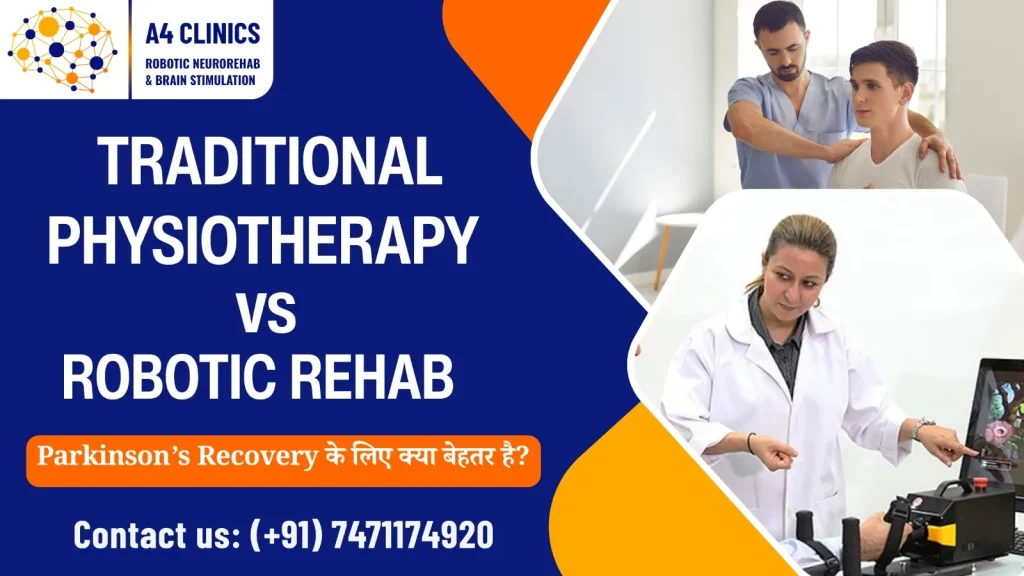
Parkinson’s disease एक progressive neurological disorder है जो movement को प्रभावित करता है। Tremors, bradykinesia (slowness of movement), rigidity और postural instability जैसे symptoms daily life को चुनौतीपूर्ण बना देते हैं। सही rehabilitation approach से patients अपनी mobility, balance और independence को बेहतर बना सकते हैं। आजकल Traditional Physiotherapy और Robotic Rehab दोनों ही options उपलब्ध हैं, लेकिन Parkinson’s recovery के लिए कौन सा बेहतर है? A4 Clinics जैसे advanced Neurorehabilitation centre in Indore में robotic technology और brain stimulation के combination से patients को बेहतर outcomes मिल रहे हैं। इस blog में हम दोनों approaches की comparison करेंगे, उनके benefits, limitations और Parkinson’s patients के लिए best strategy पर चर्चा करेंगे। Parkinson’s Disease में Rehabilitation की भूमिका Parkinson’s में dopamine producing cells की degeneration से motor control प्रभावित होता है। Physiotherapy symptoms को manage करने, progression को delay करने और quality of life सुधारने में महत्वपूर्ण role निभाती है। Regular exercises से stiffness कम होती है, gait pattern सुधरता है और fall risk घटता है। Traditional Physiotherapy लंबे समय से इस्तेमाल हो रही है, जबकि Robotic Rehab technology-driven approach है जो high repetition और precision प्रदान करता है। दोनों को combine करके Best Physiotherapy Centre in Indore जैसे centers में comprehensive care दिया जाता है। Traditional Physiotherapy क्या है? (What is Traditional Physiotherapy?) Traditional physiotherapy manual techniques, exercises और hands-on therapy पर आधारित होती है। Therapist patients को guided exercises करवाते हैं जैसे stretching, strengthening, balance training और gait training। Key Features of Traditional Physiotherapy Parkinson’s में traditional physio tremors को control करने, muscle rigidity कम करने और posture सुधारने में मदद करती है। Limitations of Traditional Physiotherapy Robotic Rehab क्या है? Parkinson’s Recovery में Revolution Robotic rehabilitation computer-controlled devices का इस्तेमाल करके movements को assist या resist करती है। A4 Clinics में robotic physiotherapy upper limbs, lower limbs, gait और fine motor skills के लिए इस्तेमाल होती है। Interactive games और sensors के साथ patients engage रहते हैं। How Robotic Rehab Works for Parkinson’s Robots patients को safe environment में thousands of repetitions करवाते हैं। Parkinson’s में gait freezing, shuffling steps और balance issues को target किया जाता है। Robotic exoskeletons या arm devices physiological patterns follow करते हैं। Key Benefits of Robotic Rehabilitation Studies दिखाते हैं कि robotic-assisted gait training Parkinson’s patients में lower limb function, balance और fatigue को बेहतर बनाता है। Upper limb dexterity और daily activities में improvement आता है। A4 Clinics के robotic program में walk training और strength & movement therapy शामिल हैं, जो Parkinson’s recovery को accelerate करते हैं। Traditional Physiotherapy vs Robotic Rehab: Side-by-Side Comparison Aspect Traditional Physiotherapy Robotic Rehab Repetition Capacity Moderate Very High (1000+ steps possible) Precision & Consistency Therapist dependent Technology-driven, highly consistent Patient Engagement Good (human interaction) Excellent (games + feedback) Safety for Severe Cases Limited in advanced stages High (body weight support) Data & Progress Tracking Subjective Objective & detailed reports Neuroplasticity Effect Good Superior due to intensity Suitability for Parkinson’s Effective for mild-moderate cases Better for moderate-advanced, gait issues Robotic rehab traditional therapy से superior outcomes देती है खासकर gait, balance और motor function में, लेकिन human touch की जगह नहीं ले सकती। Parkinson’s Recovery के लिए Best Approach: Combination Therapy Research और clinical practice दोनों बताते हैं कि Robotic Rehab + Traditional Physiotherapy का combination सबसे effective है। Why Combination Works Best at A4 Clinics Patients में improved walking stability, reduced freezing episodes, better hand function और overall confidence देखा गया है। Real-Life Benefits for Parkinson’s Patients Best Physiotherapy Centre चुनते समय technology integration, experienced team और holistic care देखें। Challenges and Considerations Robotic rehab के benefits के साथ कुछ challenges भी हैं: Parkinson’s management में medications, exercise, diet और psychological support का पूरा package जरूरी है। Regular follow-ups और home exercises से long-term gains मिलते हैं। Conclusion Traditional Physiotherapy vs Robotic Rehab Parkinson’s Recovery के लिए – कोई एक winner नहीं है। दोनों के strengths को combine करके best results मिलते हैं। Robotic rehabilitation intensity, precision और neuroplasticity के मामले में ahead है, जबकि traditional therapy adaptability और human connection प्रदान करती है। A4 Clinics जैसे advanced Neurorehabilitation centre in Indore में patients को state-of-the-art robotic physiotherapy, brain stimulation और expert care मिलता है जो Parkinson’s symptoms को effectively manage करता है और life quality सुधारता है। अगर आप या आपके loved one Parkinson’s से जूझ रहे हैं, तो early intervention से बेहतर mobility और independence पा सकते हैं। Recovery journey में सही rehabilitation approach चुनना game-changer साबित हो सकता है। Best Physiotherapy Centre in Indore में modern technology और compassionate care का सही मिश्रण ढूंढें। Consistent efforts और professional guidance के साथ Parkinson’s के साथ meaningful life जीना possible है।
Parkinson’s Recovery में Strength & Movement Therapy कैसे काम करती है?
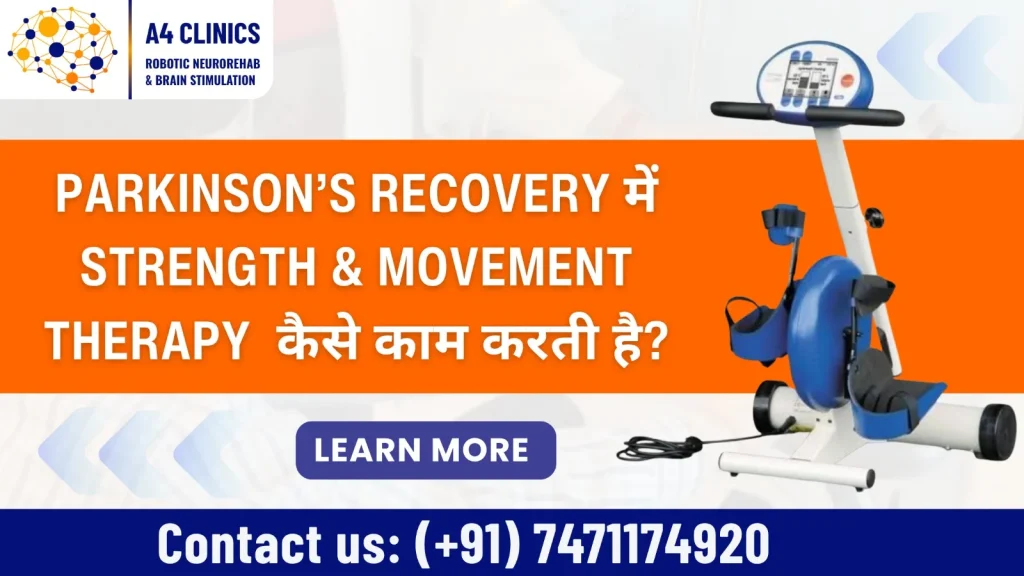
Parkinson’s disease एक progressive neurological disorder है जो movement को प्रभावित करता है। Tremors, stiffness, bradykinesia (slow movement), balance problems और gait disturbances जैसे symptoms रोजमर्रा की जिंदगी को चुनौतीपूर्ण बना देते हैं। लेकिन अच्छी खबर यह है कि Strength and Movement Therapy Parkinson’s recovery में महत्वपूर्ण भूमिका निभा सकती है। A4 Clinics Indore में Neurorehabilitation centre in Indore और Best Physiotherapy Centre in Indore के रूप में advanced therapies प्रदान करता है, जहां robotic-assisted strength & movement therapy Parkinson’s patients को बेहतर mobility, strength और quality of life देने में मदद करती है। Parkinson’s Disease में Movement Challenges क्या हैं? Parkinson’s में dopamine-producing cells की कमी के कारण brain के motor control area प्रभावित होते हैं। इससे muscles rigid (stiff) हो जाते हैं, movements छोटे और धीमे पड़ जाते हैं, और balance बिगड़ जाता है। ये challenges सिर्फ physical नहीं बल्कि emotional और mental health को भी प्रभावित करते हैं। यहीं पर targeted Strength and Movement Therapy intervention काम आती है। Strength & Movement Therapy क्या है? Strength and Movement Therapy Parkinson’s recovery का एक specialized approach है जो muscle strength बढ़ाने, movement patterns को relearn करने और overall mobility सुधारने पर focus करती है। A4 Clinics में यह therapy arm trainer और leg trainer के साथ आती है, जिसमें Right-Left Symmetry Training, Servo Cycling, Active/Passive Detection, Movement Protector और Spasm Control जैसी advanced features शामिल हैं। यह therapy neuromuscular disorders वाले patients के लिए specially designed है, जहां repetitive, controlled movements brain plasticity को stimulate करते हैं और dopamine utilization को बेहतर बनाते हैं। Strength & Movement Therapy Parkinson’s Recovery में कैसे काम करती है? 1. Muscle Strength और Endurance बढ़ाना Parkinson’s patients में muscle weakness आम है। Strength training resistance exercises, weights या specialized trainers के जरिए muscles को challenge करता है। इससे muscle mass और power बढ़ता है, जो daily activities को easier बनाता है। A4 Clinics के leg और arm trainers patients को safe way में resistance provide करते हैं, जिससे lower और upper body strength improve होती है। Research दिखाता है कि regular strength training bradykinesia, motor symptoms और functional performance में सुधार ला सकता है। 2. Movement Amplitude और Coordination सुधारना Parkinson’s में movements छोटे हो जाते हैं। Therapy exaggerated movements (जैसे big steps, arm swings) सिखाती है। Servo Cycling feature minimal muscle effort से active training allow करता है, जिससे patients अपनी residual strength maintain और build कर पाते हैं। Active/Passive Detection automatically motor assistance provide करता है जब patient थक जाता है। इससे longer training sessions possible होते हैं और better therapy outcomes मिलते हैं। 3. Symmetry Training और Gait Improvement एक तरफ की weakness (hemiplegia जैसी) को target करने के लिए Right-Left Symmetry Training real-time biofeedback देता है। Patients weak side पर focus कर पाते हैं, जिससे gait pattern सुधरता है और walking confidence बढ़ता है। Relearning the movement pattern repetitive training से होता है, जो brain को नए neural pathways बनाने में मदद करता है। 4. Spasticity और Safety Management Spasms या muscle tightness वाले patients के लिए Movement Protector और Spasm Control technology muscle damage prevent करती है। Spasm detect होने पर trainer automatically direction change कर spasm relieve करता है। यह feature Parkinson’s जैसे conditions में बहुत helpful है जहां rigidity common है। 5. Balance, Flexibility और Non-Motor Benefits Strength & Movement Therapy balance exercises, flexibility training और multitasking को combine करती है। इससे fall risk कम होता है, posture सुधरता है और mood भी बेहतर होता है। Aerobic elements circulation improve करते हैं और oxygen supply बढ़ाते हैं। A4 Clinics में Strength & Movement Therapy के Unique Features A4 Clinics को Neurorehabilitation centre और Best Physiotherapy Centre in Indore बनाने वाली बात यह है कि यहां therapy advanced technology के साथ personalized होती है: Strength & Movement Therapy के Benefits Parkinson’s Patients के लिए Research studies confirm करते हैं कि strength training 2-3 days per week (8-10 weeks) muscle strength, balance, walking speed और motor symptoms में significant improvement ला सकता है। Who Can Benefit from This Therapy? Strength & Movement Therapy early-stage से लेकर advanced Parkinson’s patients के लिए beneficial है। Young-onset Parkinson’s वाले individuals भी early intervention से long-term benefits ले सकते हैं। Caregivers और family members भी therapy process में involve होकर support provide कर सकते हैं। A4 Clinics में therapists patients की current condition, symptoms severity और goals के आधार पर personalized plan बनाते हैं। Practical Tips for Parkinson’s Patients Conclusion Parkinson’s Recovery में Strength & Movement Therapy एक powerful tool है जो न सिर्फ symptoms manage करती है बल्कि patients को नई hope और independence देती है। A4 Clinics Indore में Neurorehabilitation centre in Indore के रूप में advanced robotic strength & movement therapy के जरिए Parkinson’s patients की life quality सुधारने में committed है। यदि आप या आपके loved one Parkinson’s से जूझ रहे हैं, तो strength and movement therapy जैसी evidence-based interventions early adopt करना फायदेमंद हो सकता है। Consistent efforts और professional guidance के साथ बेहतर mobility और fulfilling life possible है। A4 Clinics में modern neurorehabilitation approaches से Parkinson’s management को next level पर ले जाएं। Recovery journey आज ही शुरू करें – stronger, steadier movements की ओर!
Neuroplasticity क्या है और Stroke Recovery में इसका क्या Role है?
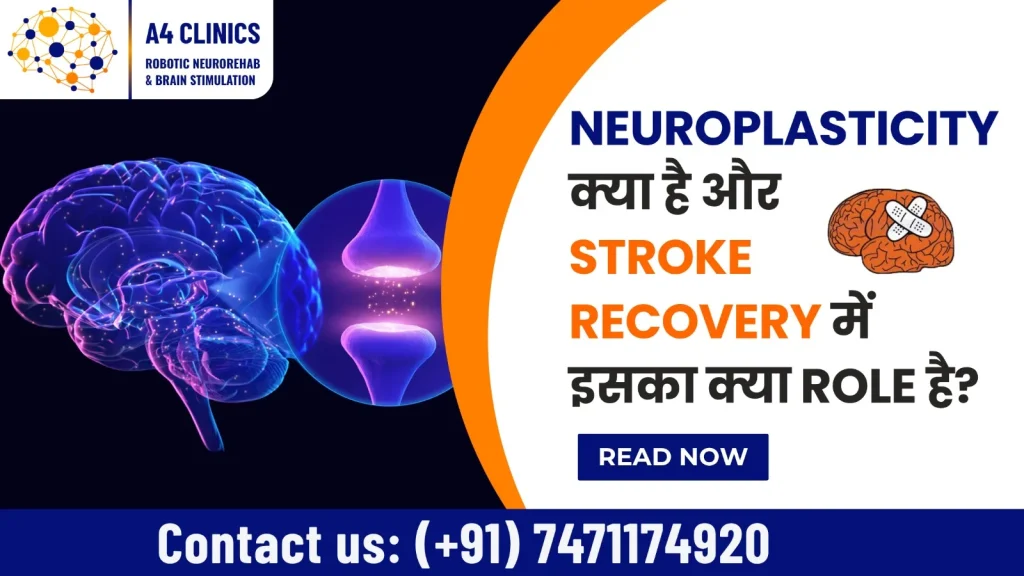
Stroke एक गंभीर समस्या है जो दुनिया भर में लाखों लोगों को प्रभावित करती है। भारत में भी स्ट्रोक के मामले बढ़ रहे हैं, खासकर युवा उम्र में। लेकिन अच्छी खबर यह है कि दिमाग की एक अद्भुत क्षमता – neuroplasticity – स्ट्रोक से हुई क्षति को कम करने और जीवन को बेहतर बनाने में मदद कर सकती है। इस ब्लॉग में हम विस्तार से समझेंगे कि neuroplasticity क्या है, यह कैसे काम करती है और stroke recovery में इसका कितना महत्वपूर्ण role है। Neuroplasticity क्या है? Neuroplasticity, जिसे brain plasticity भी कहा जाता है, हमारे दिमाग की वह क्षमता है जो खुद को reorganize करने, नई neural connections बनाने और पुरानी connections को मजबूत करने की देती है। पहले वैज्ञानिक सोचते थे कि adult brain fixed होता है और इसमें बदलाव नहीं हो सकता, लेकिन आधुनिक research ने साबित कर दिया है कि brain जीवन भर बदल सकता है। सरल शब्दों में कहें तो neuroplasticity दो प्रकार की होती है: – Structural Plasticity: Brain के physical structure में बदलाव, जैसे नई synapses (connections between neurons) बनना या dendrites का बढ़ना। – Functional Plasticity: Brain के damaged हिस्से की जगह healthy हिस्से functions ले लेते हैं। यह प्रक्रिया experience-dependent है, यानी जितना ज्यादा आप कोई activity repeat करते हैं, उतनी मजबूत connections बनती हैं। Stroke के बाद यह प्रक्रिया naturally शुरू होती है, लेकिन proper rehabilitation से इसे boost किया जा सकता है। Stroke के बाद Brain पर क्या Impact पड़ता है? Stroke तब होता है जब brain में blood supply रुक जाती है या bleed हो जाता है। इससे brain cells मर जाते हैं और signals भेजने वाली pathways damage हो जाती हैं। नतीजा – paralysis, speech problems, memory loss, balance issues आदि। लेकिन brain पूरी तरह dead नहीं होता। Surrounding healthy areas और opposite hemisphere compensatory mechanisms activate करते हैं। यही neuroplasticity की शुरुआत है। Studies दिखाते हैं कि stroke के बाद पहले कुछ हफ्ते या महीने hyperplastic period होते हैं, जब brain सबसे ज्यादा adaptable होता है। Stroke Recovery में Neuroplasticity का Role Neuroplasticity stroke recovery का backbone है। यह brain को rewire करने की ताकत देती है ताकि lost functions वापस आएं या compensate हों। कैसे काम करता है? – Cortical Remapping: Damaged area के आसपास के neurons नई responsibilities ले लेते हैं। – Synaptic Strengthening: Repetitive practice से weak connections मजबूत होती हैं (Hebb’s rule: “neurons that fire together, wire together”)। – Sprouting: Healthy neurons नए branches बनाते हैं damaged areas की तरफ। Research के अनुसार, rehabilitation therapies neuroplasticity को harness करके recovery speed up करती हैं। बिना therapy के spontaneous recovery सीमित होती है, लेकिन targeted exercises के साथ functional improvement बहुत बेहतर होता है। Neurorehabilitation Techniques जो Neuroplasticity को Boost करती हैं Effective recovery के लिए neurorehabilitation जरूरी है। Neurorehabilitation centre in Indore जैसे specialized centers में multidisciplinary approach अपनाया जाता है – physiotherapy, occupational therapy, speech therapy और cognitive training। Best Physiotherapy Centre in Indore में experts constraint-induced movement therapy (CIMT), mirror therapy, task-specific training आदि techniques इस्तेमाल करते हैं। ये techniques brain को force करते हैं कि affected limb का इस्तेमाल बढ़े और नई pathways बने। कुछ महत्वपूर्ण Strategies: 1. Repetitive Task-Specific Training रोजाना walking practice, arm movements या grasping exercises। Repetition neuroplastic changes को drive करती है। 2. Aerobic Exercise Brisk walking, cycling या swimming। यह BDNF (Brain-Derived Neurotrophic Factor) बढ़ाता है, जो neuron growth को promote करता है। 3. Mirror Therapy Unaffected limb की movement को mirror में देखकर brain को illusion मिलता है कि affected limb भी move कर रहा है। Stroke patients में pain और movement recovery के लिए effective। 4. Mental Practice / Motor Imagery Eyes closed करके movements को mentally imagine करना। Brain same areas activate करता है जैसे actual movement में। 5. Speech and Language Therapy Melodic Intonation Therapy या repetitive naming exercises aphasia के लिए। 6. Cognitive Training Memory games, puzzles, apps जो attention और executive function सुधारें। 7. Sensory Stimulation Different textures touch करना, music therapy या electrical stimulation (TES)। Neurorehabilitation centre in Indore advanced tools जैसे robotic therapy या virtual reality भी use करते हैं जो engaging way में high repetition provide करते हैं। Best Physiotherapy Centre in Indore personalized plans बनाते हैं patient की severity, age और goals के according। Consistency सबसे महत्वपूर्ण है – daily practice brain को signal देता है कि changes जरूरी हैं। Recovery को Maximize करने के Tips – Early Intervention: जितनी जल्दी rehab शुरू करें, उतना बेहतर। Golden period पहले 3-6 महीने होते हैं, लेकिन neuroplasticity lifetime रहती है। – High Intensity, High Repetition: Short sessions multiple times a day बेहतर than long infrequent sessions। – Motivation और Engagement: Fun activities जैसे dancing, playing instrument या gardening शामिल करें। – Lifestyle Factors: Healthy diet (omega-3 rich foods), good sleep, stress management और social interaction neuroplasticity support करते हैं। – Family Support: Caregivers की encouragement recovery journey को positive बनाती है। – Track Progress: Small improvements note करें – motivation मिलता रहेगा। Stroke survivors की stories inspiring होती हैं। कई लोग जो initially wheelchair bound थे, consistent effort से walking कर पाते हैं। Neuroplasticity यही hope देती है कि recovery possible है। Challenges और Realistic Expectations Neuroplasticity powerful है, लेकिन limitations भी हैं। Age, stroke size, location और comorbidities recovery को affect करते हैं। Complete recovery हर case में नहीं होती, लेकिन significant functional gains possible हैं। Patience रखें। Progress slow हो सकता है, लेकिन consistent rehab से quality of life dramatically improve हो सकती है। Conclusion: Hope की किरण Neuroplasticity हमें बताती है कि brain static नहीं, dynamic organ है। Stroke recovery में इसका role game-changer है। Proper guidance और dedicated effort से patients न सिर्फ lost abilities regain करते हैं बल्कि नई strengths भी develop कर सकते हैं। अगर आप या आपके loved one ने stroke का सामना किया है, तो specialized care लें। Modern neurorehabilitation techniques brain की इस natural power को harness करके बेहतर future बना सकती हैं। Recovery एक journey है – एक कदम, एक repetition, एक connection at a time। Neuroplasticity के
Parkinson’s Patients के लिए Robotic Physiotherapy क्यों Important है?
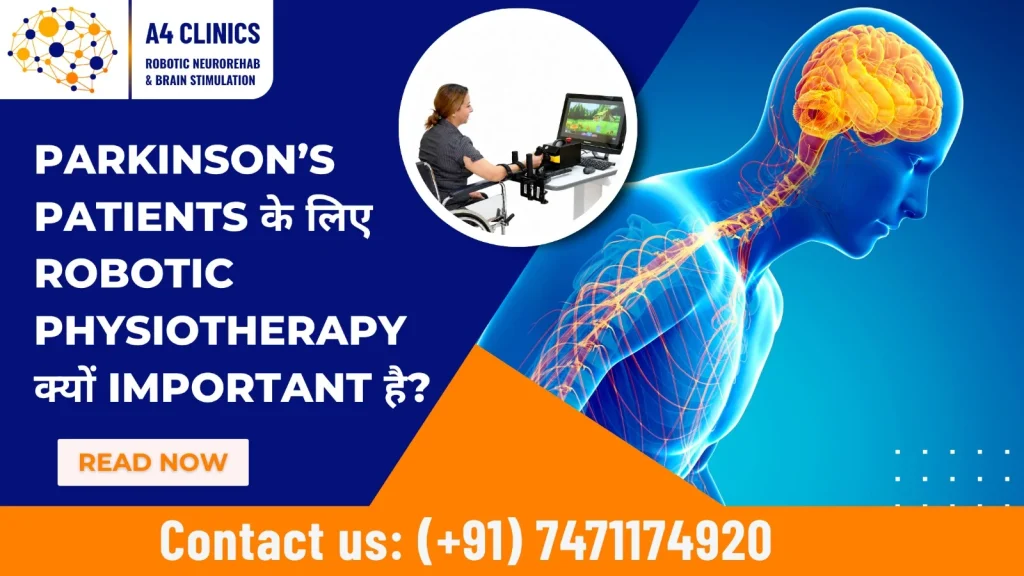
Parkinson’s disease एक progressive neurological disorder है जो movement को प्रभावित करता है। Millions of people worldwide इससे जूझ रहे हैं, और India में भी इसकी संख्या बढ़ रही है। Symptoms जैसे tremors, rigidity, bradykinesia (slow movement), postural instability, और gait freezing patients की daily life को काफी challenging बना देते हैं। Traditional physiotherapy helpful है, लेकिन Advanced Robotic Physiotherapy ने Parkinson’s management में game-changer साबित हो रही है। A4 Clinics Indore में Advanced Robotic Physiotherapy Parkinson’s patients को बेहतर mobility, balance, और quality of life देने में मदद कर रही है। Parkinson’s Disease क्या है और Patients को किन Challenges का सामना करना पड़ता है? पार्किंसन disease brain के dopamine-producing cells के degrade होने से होता है। Dopamine movement को control करने में key role play करता है। Common symptoms include: ये symptoms daily activities जैसे walking, dressing, eating, या writing को मुश्किल बना देते हैं। Early intervention के बिना condition worsen होती जाती है, जिससे independence कम होती है और caregiver burden बढ़ता है। यहीं पर physiotherapy की role आती है, और robotic version इसे next level पर ले जाती है। Traditional Physiotherapy vs Robotic Physiotherapy in Parkinson’s Traditional physiotherapy में exercises, stretching, balance training, और gait training शामिल होते हैं। ये effective हैं, लेकिन limitations हैं — therapist की manual assistance पर depend करता है, repetition limited हो सकती है, और high-intensity training fatigue के कारण challenging होता है। Robotic Physiotherapy advanced technology use करती है जैसे robotic exoskeletons, gait trainers, smart gloves, और interactive systems। ये high-intensity, repetitive, और precise movements provide करती है, जो Parkinson’s के motor learning के लिए ideal है। Studies show robot-assisted training motor symptoms, lower limb function, balance, और gait को significantly improve करता है। A4 Clinics जैसी advanced centers में robotic systems patients को personalized, data-driven therapy देते हैं, जो progress को accurately track कर सकते हैं। Robotic Physiotherapy Parkinson’s Patients के लिए क्यों Important है? 1. Improved Gait and Mobility Parkinson’s patients में shuffling gait और freezing common है। Robotic gait trainers rhythmic cues और mechanical assistance देते हैं, जो normal walking pattern को retrain करते हैं। Research में robot-assisted gait training 6MWT (walking distance), gait speed, और step length में significant improvement दिखाता है। Patients longer distances walk कर पाते हैं with less effort। 2. Better Balance and Reduced Fall Risk Balance problems से falls होते हैं, जो fractures या injury cause कर सकते हैं। Robotic systems dynamic balance training provide करते हैं, Berg Balance Scale scores को improve करते हैं। Patients confidence बढ़ता है और daily activities safer हो जाती हैं। 3. High-Intensity Repetitive Training Neuroplasticity (brain की ability to rewire itself) को stimulate करने के लिए high repetitions जरूरी हैं। Robots fatigue के बिना thousands of repetitions allow करते हैं। Exoskeleton-based training memory और gait endurance भी improve कर सकता है। 4. Reduction in Motor Symptoms UPDRS III scores (motor examination) में notable reduction देखा गया है। Tremors, rigidity, और bradykinesia manage करने में मदद मिलती है। 5. Customized और Data-Driven Therapy Robotic systems real-time feedback और adjustable resistance देते हैं। Treatment plan patient की specific needs के according customize किया जा सकता है — early-stage से advanced-stage तक। 6. Cognitive Benefits कुछ studies में robotic training executive function और overall cognition को भी improve करता है, क्योंकि physical activity brain health से linked है। 7. Motivation और Engagement Interactive games और virtual reality elements के साथ therapy fun बन जाती है। Patients regular sessions attend करते हैं, जिससे better outcomes मिलते हैं। Wearable soft robotic devices ने gait freezing को dramatically reduce किया है, patients को indoor walking में complete relief दे कर। A4 Clinics में Advanced Robotic Physiotherapy for Parkinson’s A4 Clinics Indore robotic physiotherapy के advanced options provide करता है, specially designed for neurological conditions जैसे Parkinson’s। Modern robotic systems का use करके patients को precise assistance और intensive training मिलता है, जो traditional methods से faster और more consistent results देता है। यहाँ therapy sessions में focus motor function restoration, gait re-education, balance training, और strength building पर होता है। Multidisciplinary approach के साथ robotic tech को combine किया जाता है, ताकि holistic recovery हो। Parkinson’s patients reported हैं improved mobility, reduced stiffness, और better daily functioning। Best Physiotherapy Centre in Indore के रूप में A4 Clinics robotic technology को accessible बनाता है, ताकि patients advanced care घर के पास पा सकें। Robotic Physiotherapy in Indore अब future नहीं, present है neurological rehabilitation का। Success Stories और Real-Life Impact (General Examples) कई patients robotic therapy के बाद बताते हैं कि वे पहले से ज्यादा confidently walk कर पाते हैं, freezing episodes कम हुए हैं, और overall energy levels बढ़े हैं। Family members notice करते हैं कि patient more independent हो गया है — खुद से उठना-बैठना, घर के काम करना आसान हो गया। एक typical case में, consistent robotic gait training के बाद patient की walking speed और endurance बढ़ी, जिससे social activities में participation बढ़ा और depression कम हुआ। Long-term benefits में slower disease progression और better quality of life शामिल हैं। Challenges और Future Outlook Robotic physiotherapy accessible नहीं है हर जगह, लेकिन Indore जैसे cities में centers जैसे A4 Clinics इसे possible बना रहे हैं। Cost और awareness अभी challenges हैं, लेकिन benefits long-term healthcare costs कम करते हैं। Future में AI-integrated robots और more personalized protocols और बेहतर results देंगे। Conclusion: Robotic Physiotherapy – A New Hope for Parkinson’s Patients Parkinson’s disease life-changing है, लेकिन right intervention के साथ patients active और independent life lead कर सकते हैं। Robotic Physiotherapy precision, intensity, और consistency provide करके traditional limits को overcome करती है। Motor symptoms manage करने, gait improve करने, balance बढ़ाने, और quality of life enhance करने में यह crucial role play करती है। A4 Clinics Indore Advanced Robotic Physiotherapy for Parkinson’s के साथ patients को hope और practical solutions दे रहा है। अगर आप या आपके loved one Parkinson’s से जूझ रहे हैं, तो robotic options explore करें। Best Physiotherapy Centre in Indore और Robotic Physiotherapy in Indore की तलाश में advanced care उपलब्ध है जो
क्या Repetitive Robotic Therapy से Stroke Recovery में बेहतर Results दे सकती है?
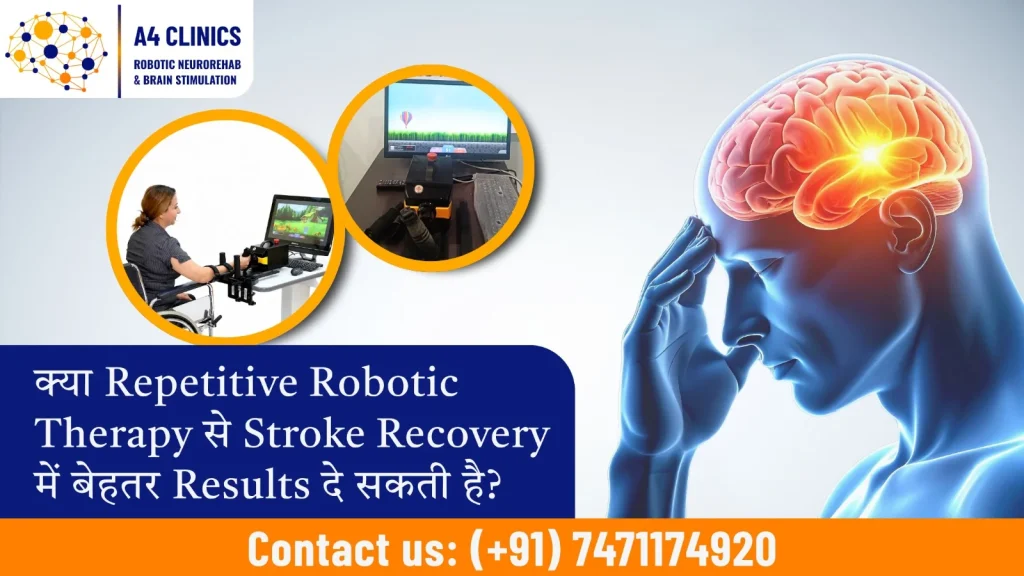
Stroke Rehabilitation in Indore में आजकल robotic therapy एक game-changer साबित हो रही है। Stroke (लकवा) के बाद मरीज़ की recovery में repetitive movements बहुत ज़रूरी होते हैं। Repetitive Robotic Therapy ठीक यही करती है – हजारों बार सटीक movements को repeat करवाकर brain की neuroplasticity को boost करती है। A4 Clinics जैसे advanced centres में यह therapy stroke patients के लिए बेहतर functional outcomes ला रही है। आइए विस्तार से समझते हैं कि repetitive robotic therapy stroke recovery में कितनी effective है। Stroke के बाद Recovery की चुनौतियाँ Stroke होने के बाद लाखों लोग paralysis, weakness, coordination की समस्या और daily activities करने में दिक्कत का सामना करते हैं। Traditional physiotherapy में therapist manually movements करवाते हैं, लेकिन इसमें repetitions की संख्या limited रह जाती है। Patient थक जाता है और therapist भी। Neuroplasticity – brain की खुद को reorganize करने की क्षमता – repetitive practice पर depend करती है। जितने ज्यादा सही repetitions, उतनी तेज़ recovery। यहीं robotic therapy advantage देती है। Repetitive Robotic Therapy क्या है? Repetitive Robotic Therapy advanced robots का इस्तेमाल करके upper limb (हाथ), lower limb (टांग) या hand movements को high-intensity repetitions के साथ train करती है। ये robots patient की ability के according adjust हो जाते हैं और precise feedback देते हैं। Indore में Best Physiotherapy Centre की तलाश में लोग robotic options चुन रहे हैं क्योंकि ये consistent high-dosage training देते हैं जो manual therapy अकेले नहीं दे पाती। Repetitive Robotic Therapy Stroke Recovery में कैसे बेहतर Results देती है? 1. High Repetitions & Intensity Manual therapy में 30-50 repetitions आसानी से हो जाते हैं, लेकिन robotic therapy में hundreds या thousands repetitions possible हैं। Studies दिखाते हैं कि high repetitions brain के नए neural pathways बनाती है। 2. Personalized & Adaptive Training Robot patient की progress के according difficulty adjust करता है। Weak muscles को support और strong movements को challenge करता है। 3. Objective Measurement Robot real-time data record करता है – strength, range of motion, accuracy। Therapist बेहतर तरीके से plan कर पाता है। 4. Reduced Therapist Fatigue Therapist patient को motivate और guide कर सकता है जबकि robot actual repetitions handle करता है। इससे longer sessions possible होते हैं। 5. Better Outcomes in Studies कई meta-analyses और RCTs दिखाते हैं कि robot-assisted therapy conventional therapy की तुलना में motor function (Fugl-Meyer score), muscle strength और activities of daily living में statistically significant improvement लाती है। Subacute phase में benefits और भी prominent हैं। Best Physiotherapy Centre in Indore में robotic approach जल्दी mobility वापस लाने में मदद करता है – walking, grasping objects, self-care activities। Robotic Therapy के Additional Benefits Robotic therapy conventional physiotherapy के साथ combine करके इस्तेमाल की जाती है – ये replacement नहीं, powerful addition है। कौन-कौन से Patients को फायदा होगा? हर patient की condition अलग होती है, इसलिए expert assessment ज़रूरी है। Traditional Physiotherapy vs Robotic Therapy Traditional physiotherapy बहुत valuable है – manual techniques, hands-on care, patient-therapist bond। Robotic therapy इसे supplement करती है। Best Physiotherapy Centre in Indore वे हैं जो दोनों को integrate करते हैं – advanced technology + experienced therapists। इससे comprehensive recovery possible होती है। Conclusion हाँ, Repetitive Robotic Therapy stroke recovery में बेहतर results दे सकती है। High-dosage, task-specific repetitions, precise feedback और neuroplasticity को maximize करने की क्षमता इसे powerful tool बनाती है। Studies consistent रूप से motor recovery, strength और functional independence में improvement दिखाते हैं। Stroke Rehabilitation in Indore में robotic therapy को adopt करने वाले centres patients को faster और बेहतर recovery का मौका दे रहे हैं। Recovery journey personalized होनी चाहिए – expert team के साथ robotic technology का सही combination long-lasting results दे सकता है। अगर आप या आपके loved one stroke से recover कर रहे हैं तो advanced rehabilitation options explore करें। Early action और consistent therapy से ज़िंदगी वापस पाई जा सकती है। Hope और science के साथ recovery possible है!
Stroke के बाद लकवा? क्या Brain Stimulation से चलने-फिरने की क्षमता में सुधार हो सकता है?
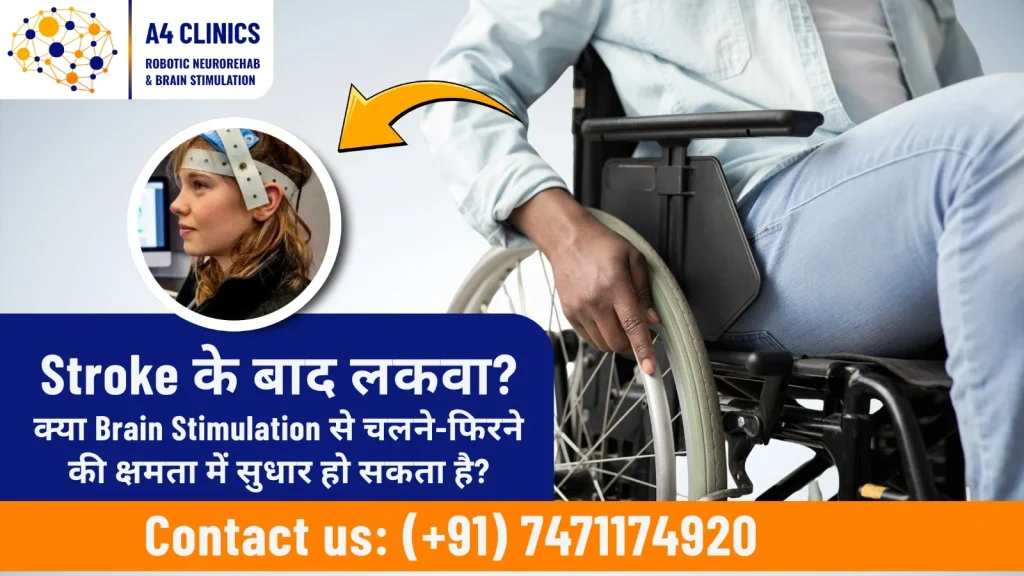
Stroke एक गंभीर समस्या है जो दिमाग के किसी हिस्से में खून का बहाव रुक जाने या फट जाने से होती है। इससे शरीर के एक तरफ लकवा (paralysis) हो सकता है, खासकर पैरों और हाथों में कमजोरी आ जाती है। कई मरीजों को चलने-फिरने, संतुलन बनाए रखने और रोजमर्रा की गतिविधियों में बहुत दिक्कत होती है। सवाल यह उठता है कि stroke rehabilitation के दौरान क्या कोई नई तकनीक मदद कर सकती है? आजकल brain stimulation जैसी non-invasive थेरेपी ने neurorehabilitation में नई उम्मीद जगाई है। खासतौर पर tDCS (Transcranial Direct Current Stimulation) से कई मरीजों में recovery बेहतर देखी गई है। Stroke के बाद लकवा क्यों होता है? Stroke होने पर दिमाग का affected हिस्सा (ज्यादातर motor cortex) damaged हो जाता है। इससे nerve signals ठीक से नहीं पहुंच पाते, जिसके कारण पैर या पूरा शरीर का एक हिस्सा कमजोर पड़ जाता है – इसे हम hemiplegia या लकवा कहते हैं। आरंभिक दिनों में physiotherapy और medicines से कुछ सुधार होता है, लेकिन कई मरीजों में chronic phase में mobility सीमित रह जाती है। यहां neuroplasticity की भूमिका महत्वपूर्ण है-दिमाग खुद को reorganize कर सकता है, लेकिन इसके लिए सही stimulation की जरूरत पड़ती है। Brain Stimulation क्या है और यह कैसे काम करती है? Brain stimulation दिमाग को हल्की electrical current से stimulate करने की सुरक्षित और painless Method है। tDCS इसमें सबसे लोकप्रिय है। इसमें scalp पर saline-soaked electrodes लगाए जाते हैं जो कम intensity की direct current भेजते हैं। यह current दिमाग के neurons की excitability बढ़ा या घटा सकता है: tDCS neuroplasticity को boost करता है, यानी damaged brain areas में नए neural connections बनाने में मदद करता है। Session, आमतौर पर 20 मिनट के होते हैं, outpatient basis पर किए जाते हैं और कोई दवा या surgery की जरूरत नहीं पड़ती। tDCS से Stroke Rehabilitation में सुधार Stroke rehabilitation in Indore, A4 Clinic, जैसी जगहों पर tDCS को standard physiotherapy के साथ combine किया जाता है। Studies दिखाते हैं कि tDCS gait recovery (चलने की क्षमता) में मदद कर सकता है, खासकर sub-acute phase में। कुछ महत्वपूर्ण फायदे: एक systematic review में पाया गया कि tDCS के साथ therapy लेने वाले मरीजों में Timed Up and Go Test (TUGT) और Functional Ambulation Category (FAC) में बेहतर स्कोर आए |हालांकि हर मरीज में रिजल्ट अलग-अलग हो सकते हैं, लेकिन जब tDCS को robotic training, balance exercises और walk training के साथ मिलाया जाता है तो recovery faster और ज्यादा effective हो सकती है। Stroke के बाद लकवे से जूझ रहे मरीजों के लिए यह combination खासतौर पर उपयोगी है क्योंकि: यह combination damaged brain pathways को rewire करने में मदद करता है, जिससे चलने-फिरने की क्षमता में meaningful improvement आ सकता है। Challenges और Expectations हर मरीज की stroke severity, time since stroke (acute/sub-acute/chronic) और lesion location अलग होती है। इसलिए results variable हो सकते हैं। Sub-acute phase में शुरू करने पर बेहतर outcomes देखे गए हैं Patients को realistic expectations रखने चाहिए – tDCS recovery को accelerate कर सकता है लेकिन miracle cure नहीं है। Consistent therapy और lifestyle changes (diet, exercise, motivation) के साथ यह बेहतर काम करता है। How A4 Clinics Help in Recovery in Stroke with tDCS A4 Clinics, Indore में advanced brain stimulation और robotic neurorehabilitation की सुविधा प्रदान करता है। यहां tDCS को stroke rehabilitation program का महत्वपूर्ण हिस्सा बनाया गया है। वे painless, drug-free तरीके से दिमाग को stimulate करके neuroplasticity बढ़ाते हैं, जिससे paralysis recovery और mobility improvement में मदद मिलती है। उनके program में tDCS को walk training, strength therapy, balance exercises और smart robotic tools के साथ integrate किया जाता है। इससे मरीजों को चलने-फिरने, संतुलन और daily functions में बेहतर सुधार दिखता है। A4 Clinics, neurorehabilitation centre in Indore में personalized care देकर stroke survivors की जिंदगी को फिर से independent और active बनाने में सहायता करते हैं। Conclusion Stroke के बाद लकवा एक चुनौती है, लेकिन सही समय पर सही brain stimulation और rehabilitation से चलने-फिरने की क्षमता में काफी सुधार संभव है। tDCS जैसी तकनीक neuroplasticity को बढ़ावा देकर recovery को नई दिशा दे सकती है, खासकर जब इसे comprehensive therapy के साथ combine किया जाए। अगर आप या आपके परिवार का कोई सदस्य stroke से प्रभावित है, तो Indore में उपलब्ध A4 Clinics से संपर्क करें। सही approach के साथ नई उम्मीद और बेहतर जिंदगी संभव है।
A4 Recovery Program: A New Hope for Parkinson’s Recovery
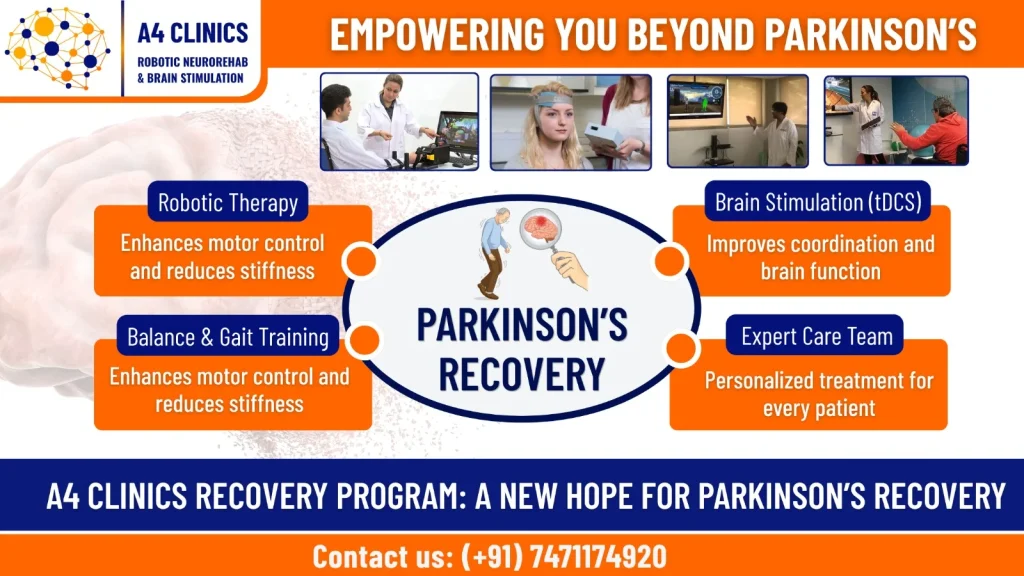
Choosing A4 Clinics for Parkinson’s recovery requires careful evaluation of individual needs, the clinic’s specialized approach, and its alignment with evidence-based neurorehabilitation principles. 1. Understanding the Need for Specialized Care Parkinson’s disease management goes beyond medication alone. Key symptoms like tremors, rigidity, bradykinesia, freezing of gait, balance issues, and voice changes require targeted rehabilitation. Research supports that intensive, multidisciplinary therapy based on neuroplasticity can: 2. A4 Recovery Program – Structured & Science-Based The program is a structured, science-based approach designed to maximize functional recovery and delay disease progression. 🔹 Key Components • Robotic Rehabilitation Improves gait, reduces freezing episodes, enhances step length and symmetry, and rebuilds walking confidence. • Non-Invasive Brain Stimulation (tDCS) Modulates brain activity to enhance motor learning, reduce rigidity, and support cognitive function when combined with therapy. • Personalized Exercise Protocols Exercise is treated as “medicine” to support dopamine function and overall brain health. • Virtual Reality & Gamified Therapy Improves engagement, motivation, and therapy adherence. 3. Intensive & Personalized Approach Intensive rehabilitation programs involve higher frequency and dosage, leading to better and longer-lasting functional outcomes. A4 Clinics emphasizes: Timely, technology-supported rehabilitation helps maintain independence and reduces caregiver burden. 4. Neuroplasticity – The Core Principle Effective rehabilitation leverages neuroplasticity—the brain’s ability to reorganize through repetitive, task-specific, high-effort training. The program promotes: 5. Why Choose Specialized Neurorehabilitation Specialized centers offer: 6. Final Thought – A Path to Independence Choosing A4 Clinics and the A4 Recovery Program reflects a commitment to advanced, multidisciplinary neurorehabilitation focused on functional recovery and quality of life. Advanced rehabilitation can significantly delay functional decline and improve independence—even in progressive conditions like Parkinson’s.
A4 Recovery Program: A New Hope for Stroke, Parkinson’s & Brain Recovery
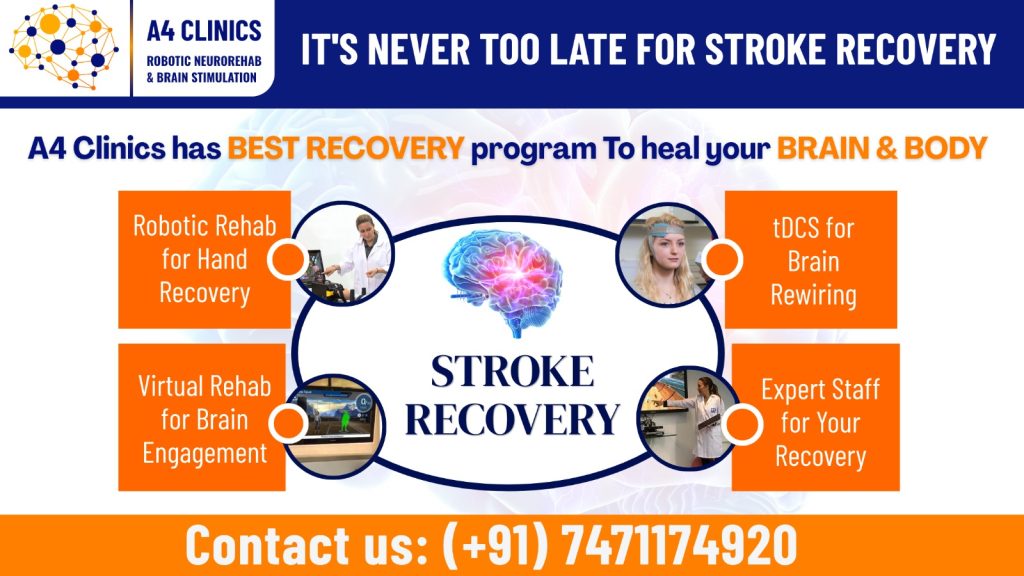
When someone suffers a stroke or starts struggling with Parkinson’s disease, life can change in an instant. One day a person is walking, talking, cooking or smiling freely. The next day, simple tasks feel impossible. Moving a hand, taking a step, speaking clearly or even keeping balance becomes a daily challenge. At A4 Clinics, we believe recovery is not just possible — it can be truly transformational. With the right approach, patients can regain independence and return to a meaningful life. What is the A4 Recovery Program? The A4 Recovery Program is a structured, science-based rehabilitation program specially designed for people recovering from neurological conditions. It helps patients with: Unlike regular physiotherapy that only works on muscles, the A4 Recovery Program focuses on brain recovery. We understand that in these conditions, the real issue lies in the brain, not just the body. Our Core Philosophy: Train the Brain The brain has an amazing ability called neuroplasticity. This means it can rewire itself, form new connections, and learn again even after damage. Most rehabilitation centers focus only on physical exercises for the arms and legs. At A4 Clinics, we go deeper. We train the brain to send better signals to the body. This helps rebuild lost connections between brain cells and activates areas that were damaged.By focusing on the brain, we help patients relearn skills like walking, using their hands, speaking clearly and maintaining balance. What Makes A4 Recovery Program Different? Real Goal: Full Independence Our aim is not just “some improvement.” We work towards real-life independence. Patients learn to: Walk on their own without supportUse their hands for daily tasks like eating, writing, or dressingSpeak more clearlyRegain balance and confidenceReturn to family life, work, or hobbies Many patients regain the joy of simple things -smiling at loved ones, going for a walk or enjoying a meal with the family. Who Can Benefit? The A4 Recovery Program is suitable for people at different stages of recovery whether the stroke or injury happened recently or years ago. Early start gives the best results, but even later intervention can bring meaningful change through neuroplasticity.We also support families. Caregivers receive guidance on how to support recovery at home and feel more confident throughout the journey. Why Choose A4 Clinics? A4 Clinics is a chain of advanced neurorehabilitation centers that combine technology with expert care. Our team of experienced neuro physiotherapists and specialists works with compassion and dedication. We focus on evidence-based methods and use modern tools like robotics and brain stimulation to give patients the best possible chance at recovery. The atmosphere is positive and encouraging — every small win is celebrated. Recovery is a journey, but you don’t have to walk it alone. At A4 Clinics, we stand with you and your family every step of the way. Take the First Step Towards Hope If you or your loved one is living with the effects of stroke, Parkinson’s, brain injury or any neurological condition, know that hope is real. Don’t wait for small improvements that may come slowly on their own. With the right brain-focused program, faster and better recovery is possible.Contact A4 Clinics today for a detailed assessment and personalized consultation. Let us help you or your family member rediscover independence and joy in life.Recovery is not just about moving the body – it’s about retraining the brain and rebuilding life.A4 Recovery Program — Because every brain deserves a new beginning.
Parkinson’s (पार्किंसन)को समझें: कारण, खतरे और इलाज का सरल मार्गदर्शन
Parkinson’s disease एक slowly progressive neurological condition है जो body movement, balance और coordination को affect करती है. India में इसके cases बढ़ रहे हैं, इसलिए इसे simple language में समझना बहुत ज़रूरी है. इस blog में हम Parkinson’s के causes, risk factors, symptoms और treatment options को समझेंगे. साथ ही जानेंगे कि A4 Clinics जैसी जगह पर advanced neuro‑rehab कैसे patients की life को better बनाती है. Parkinson’s Disease क्या होती है? Parkinson’s Disease तब होती है जब brain में बनने वाला chemical Dopamine कम हो जाता है. Dopamine body की smooth movement के लिए सबसे important होता है. जब यह कम होने लगता है, तो चलना, हाथ‑पैर चलाना, लिखना और daily activities में दिक्कत आने लगती है. Parkinson’s के common early symptoms (Hinglish में) 1. हाथ या पैर में कम्पन (Tremors) Rest mode में भी हाथ, उंगलियाँ या कभी‑कभी चेहरे में हल्की कम्पन होती है. 2. शरीर में जकड़न (Stiffness) Movement slow लगने लगती है, जैसे body भारी हो गई हो. 3. चलने में बदलाव (Shuffling gait) Walking style बदल जाता है — कदम छोटे हो जाते हैं और balance भी कमजोर महसूस होता है. 4. चेहरे के भाव कम होना (Reduced facial expression) Face एक जैसा दिखने लगता है, expressions कम हो जाते हैं. 5. लिखावट का बदलना (Micrographia) Handwriting बहुत छोटी और unclear हो जाती है. ये symptoms धीरे‑धीरे develop होते हैं, इसलिए इन्हें ignore नहीं करना चाहिए. Parkinson’s Disease क्यों होती है? (Causes) Exact cause अभी पूरी तरह clear नहीं है, लेकिन doctors कुछ important reasons बताते हैं: 1. बढ़ती उम्र (Age factor) ज़्यादातर cases 55–60 साल के बाद दिखते हैं. 2. आनुवंशिक कारण (Genetic factor) अगर family में किसी को Parkinson’s है तो risk थोड़ा बढ़ सकता है. 3. पर्यावरणीय कारण (Environmental exposure) Pesticides, chemicals या pollution के लंबे exposure से भी risk बढ़ सकता है. 4. दिमाग की कोशिकाओं का damage Brain की dopamine‑producing cells unknown reasons से damage हो सकती हैं. 5. सिर की पुरानी चोट (Old head injury) Severe head injuries भी risk बढ़ाती हैं. कौन लोग ज़्यादा risk पर हैं? इन लोगों को early symptoms पर ध्यान देना चाहिए. Parkinson’s का treatment कैसे होता है? Parkinson’s का permanent cure नहीं है, लेकिन सही treatment और neuro‑rehab से symptoms को control किया जा सकता है और जीवन quality काफी improve होती है. 1. Medicines Doctors Dopamine level maintain करने वाली medicines देते हैं, जो tremors, stiffness और slow movement को control करने में मदद करती हैं. 2. Physiotherapy Regular physiotherapy से balance, strength, walking और flexibility improve होती है. 3. Neuro‑Rehabilitation ये Parkinson’s management का सबसे important part है. इसमें शामिल होता है: 4. Lifestyle support Daily stretching, yoga, walking और healthy diet भी helpful होते हैं. Parkinson’s care में A4 Clinics क्यों special है? A4 Clinics Parkinson’s patients के लिए personalized rehabilitation program तैयार करता है.यहाँ modern equipment और experienced neuro‑rehab specialists मिलकर treatment plan बनाते हैं. A4 Clinics में मिलने वाली सेवाएँ: यहाँ focus सिर्फ symptoms कम करने पर नहीं बल्कि patient की रोजमर्रा की life को easy बनाने पर है. Conclusion Parkinson’s Disease डरने वाली नहीं, समझने वाली condition है.अगर symptoms को जल्दी पहचान लिया जाए और सही treatment शुरू किया जाए, तो patient active और independent life जी सकता है. Tremors, slow movement, stiffness या balance problem जैसे signs दिखें तो तुरंत expert को दिखाएँ. Parkinson’s care के लिए A4 Clinics जैसी जगह पर advanced treatment और neuro‑rehab से recovery और life quality दोनों improve होती हैं. अगर आप अपने पास best treatment options ढूँढ रहे हैं, तो Neurological rehabilitation near me search करते समय A4 Clinics को ज़रूर देखें।